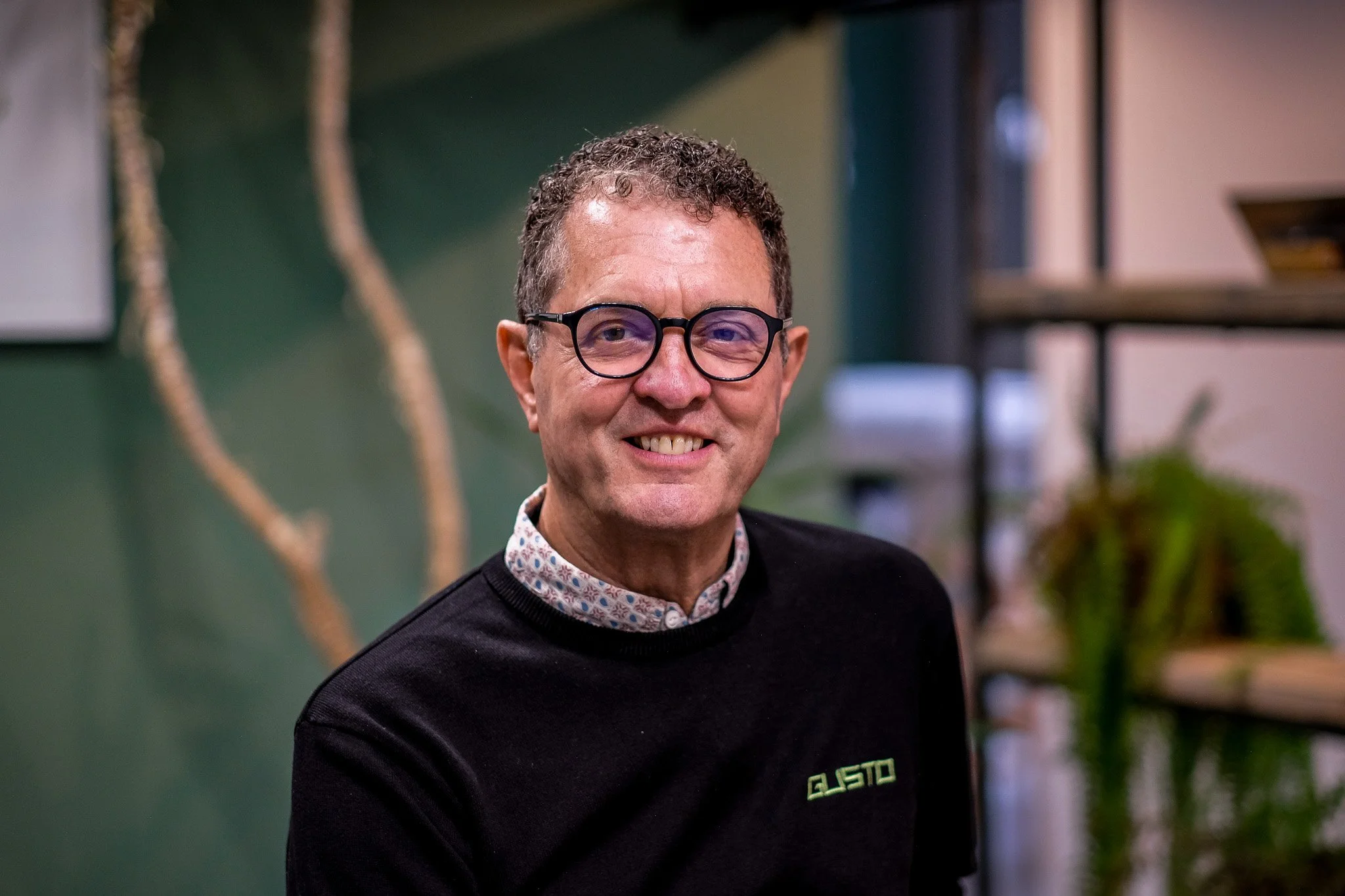
Steff Wright: The Story Behind Gusto Group
At Gusto Group, we don’t just talk about sustainability; we build it into everything we do.
What started out as two brothers with a wheelbarrow and a van has become a pioneering B Corp that is now transitioning to an Employee Ownership Trust (EOT).
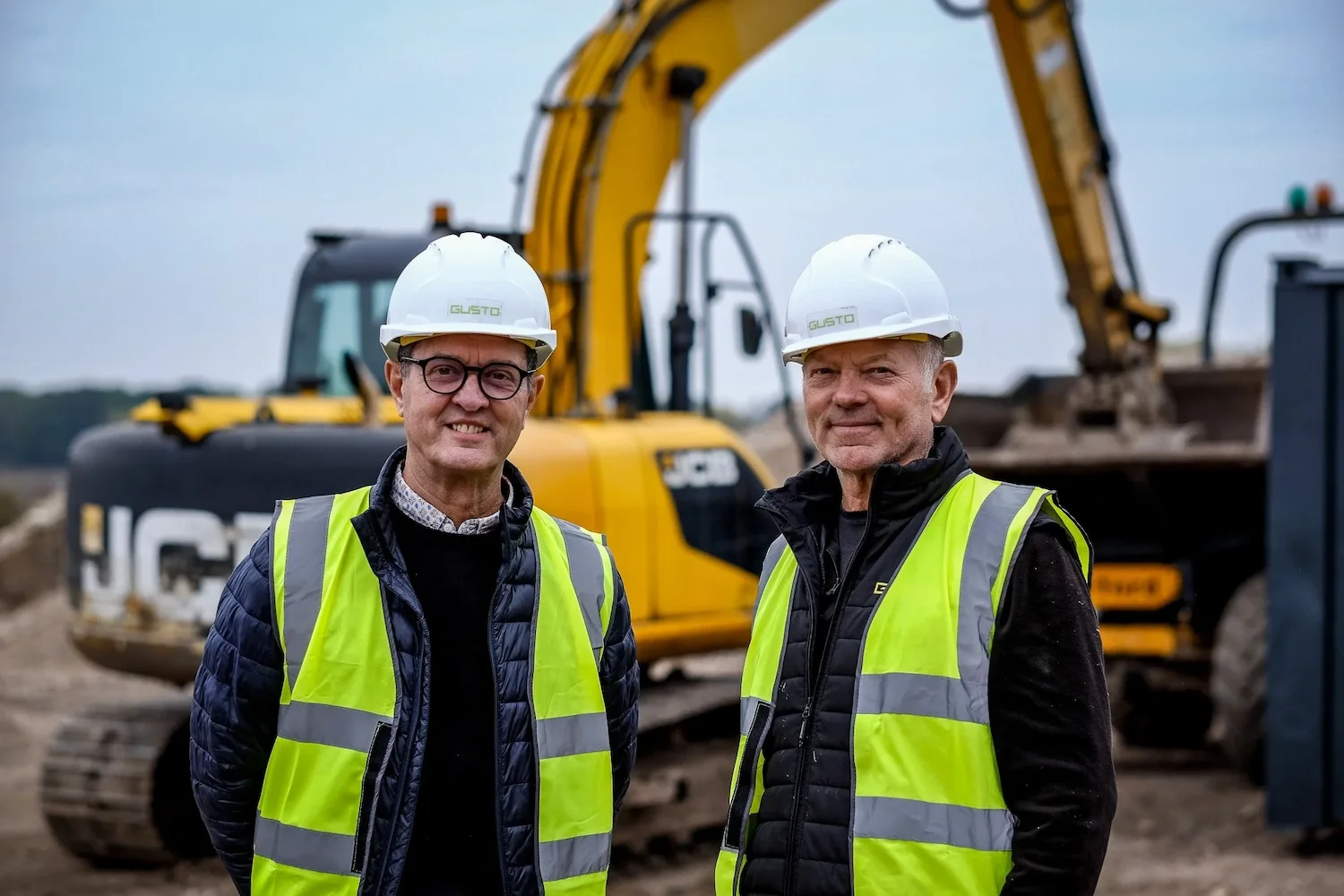
Brothers and founders: Steff and Jerome Wright.
We sat down with our founder, Steff Wright, to talk about where it all began, the risks that paid off, and why the future of the company belongs to the people who build it.
Our Q&A with Steff Wright
Q: Looking back to the 90s, how did Gusto Construction begin?
Steff: I always go back to saying Gusto started with a wheelbarrow and a van, because it very much did. I always had an enthusiasm for business and wanted my own business. So, I went out and bought a wheelbarrow and a van and began doing small construction projects with my brother Jerome in Collingham, where we are still based today!
For me, it was all about getting used to delivering a high-quality and efficient service for our customers, alongside learning how to charge for things and invoice too.
By my early twenties, I’d managed to borrow some money from the bank (something that would be a lot harder today!) to buy a property and convert it into three flats. That hands-on, entrepreneurial start really set the tone, and Gusto Construction just grew from there really!
Not only did I have this construction business, but I also had a mobile DJ business called “Dr. Gusto!”
The name came from a brainstorming session with my mum over tea. She was the creative one and wrote down a list, and “Dr. Gusto” just stuck.
Q: How important was Millennium Green to Gusto Construction’s journey?
Steff: It was a massive inflection point. We went from doing one or two houses at a time to a 20-house development. But more than the scale, it was about the shift towards sustainability. Before purchasing Millennium Green, I was just building the same as everyone else did.
I never went to university. I left school at 16 without A-levels. Because I was coming home late from DJing, I started watching Open University on TV. That’s how I learned about innovative technologies. At Millennium Green, we implemented solar water heating, rainwater harvesting, and advanced insulation that had never been used in the UK before. While others were just talking about it, we were actually doing it.
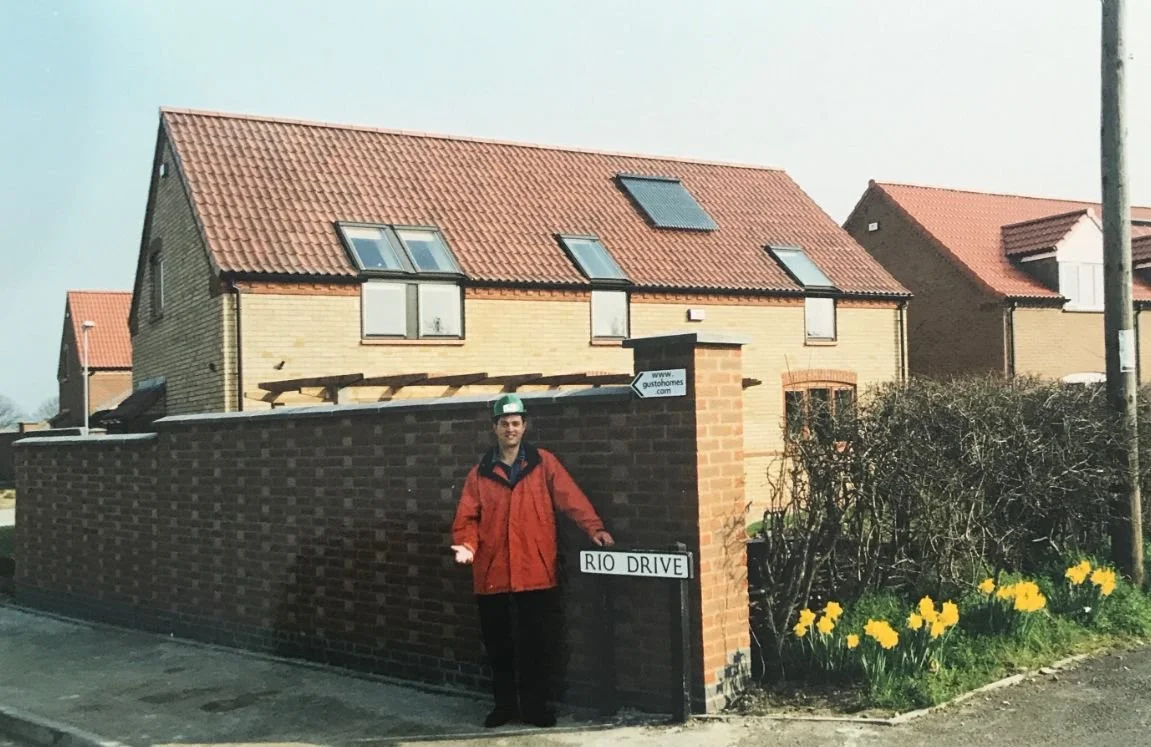
Where it all began: Steff at Rio Drive, Millennium Green.
Q: Why is sustainability so important to you?
Steff: If we want the world to continue to be a planet that we can all live on, we must look at sustainable solutions and not chew up all our natural resources whilst adding to a pile of waste.
Sustainability was a concept I very quickly understood and something I became very interested in - from a business point of view, it also makes perfect sense. People want better, more efficient products. When we got our B Corp certification, it didn't really change how we worked; it just “rubber-stamped” the values we’d already held for decades.
Q: How did Gusto Group acquire Rototek and Studio G?
Steff: One of the things I set up when working on Millennium Green was FreeRain, which was a business that sold rainwater harvesting systems. So, we were buying these large tanks from Germany and then selling those and installing them for people. The business was going very well, so I decided to begin manufacturing these tanks in the UK, and Rototek were local, so we went to them and they began manufacturing these tanks for us.
About a year later, they got into financial trouble. The only way we were going to be able to continue manufacturing these tanks here was if I bought the business. So, I stepped in via a "pre-pack" to save our supply chain. At the time, the business was losing more money than I was making. It could have bankrupted all my businesses! But we turned it around, we’ve tripled the number of staff, and it’s now a very successful manufacturing business.
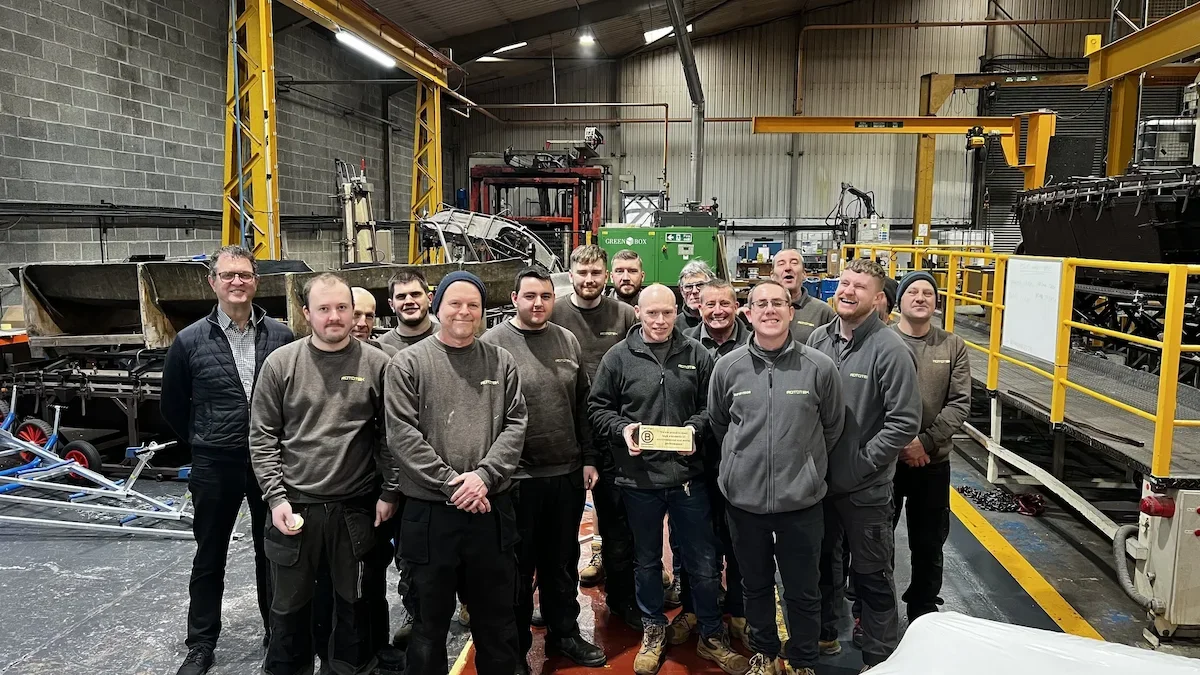
The Rototek team in Newark, a business Steff saved to protect the supply chain, now a thriving part of the group.
Studio G was similar. Gusto Construction were doing most of our design in-house and then we decided it would be better to turn this into a separate business, so we set it up. Not long after, another architectural practice in Newark went bust, and there were four people working for them who reached out to us, explained their situation and said they had some good projects and asked to work with us. So literally, over the course of a weekend we made the decision and brought them on board.
Initially, Studio G was just working on our own projects, but then we started to do a lot more external work for several clients and now it has successfully grown into what it is today.
Q: You’re now moving to an Employee Ownership Trust (EOT). Why now, and what are you most excited about?
Steff: I am most excited about seeing the culture shift where people stop thinking like "employees" and start thinking like "business owners". If everyone is focused on making their part of the business the best it can be, the whole group stands out. That’s the beauty of it - everyone will share in the success.
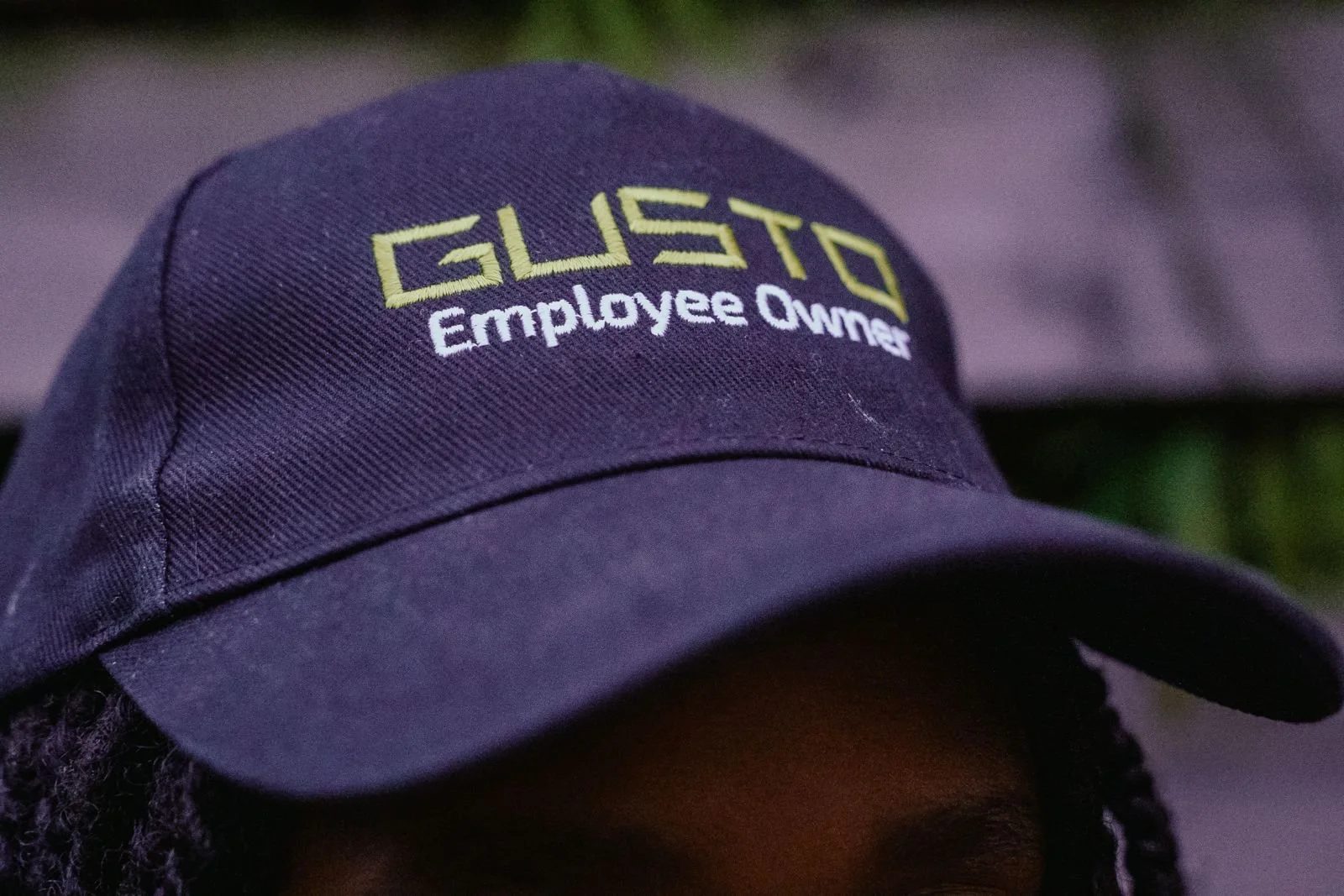
Moving to an Employee Ownership Trust (EOT) means every team member has a stake in Gusto’s future.
I’m also excited about how we’re using AI. I don't see AI as a threat; I see it as a new "employee" or a "helper" that works alongside our team to make them more efficient.
I am very excited about the next few years here at Gusto Group!